 Familias
Yesterday I had the pleasure of delivering a training session at CEP Santander for teachers from different schools across Cantabria.
We began by looking at autonomy as participation in meaningful activities. From this perspective, we connected autonomy with three key dimensions: the individual characteristics of the person, the elements of the activity itself, and the social and physical context in which the activity takes place.
At the beginning of the session, we placed particular emphasis on the role of the teacher as a fundamental pillar of the social context. We discussed the Pygmalion effect, which highlights the importance of the way we look at and perceive a person, as well as the studies of John Hattie, which show the significant impact teachers have on academic achievement.
From there, we moved into the individual aspects, exploring Sensory Integration according to Jean Ayres. We looked at the wide variability of the vestibular system in people’s functioning and at how the different sensory systems interact with one another. In this context, we also spoke about the proprioceptive and tactile systems and how all of them work together in everyday functioning.
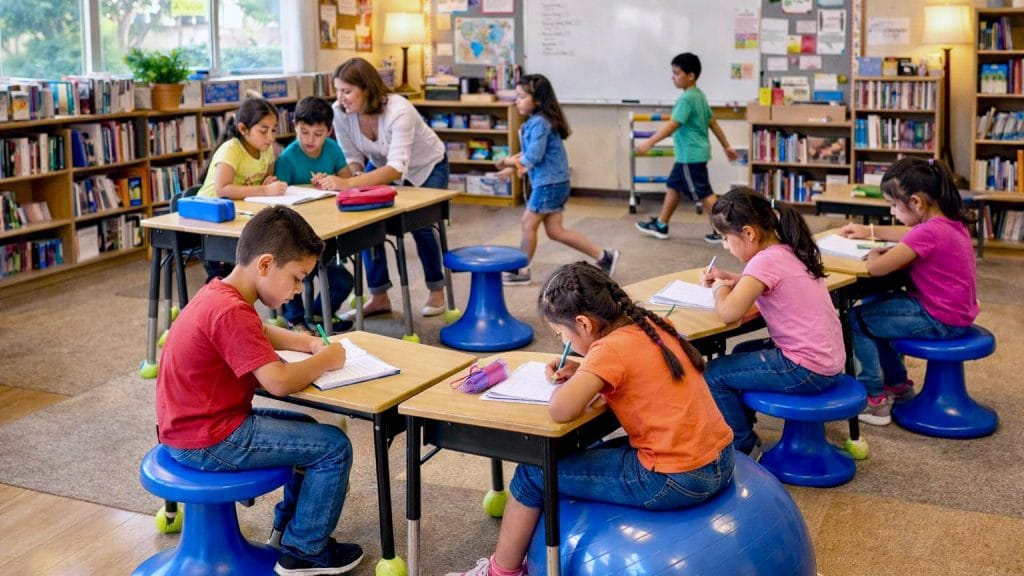
We also reviewed some common myths around tools that have become popular in recent years, such as weighted vests, discussing the scientific evidence that currently supports—or does not support—their use.
We addressed topics related to regulation and its relationship with sensory processing. We also reflected on current school routines and how they often require more movement than most children currently experience. We looked at studies that highlight the importance of movement for attention, learning, and functional performance.
Throughout the session, we continuously connected neurological functioning with learning and autonomy.
Teachers shared very clearly how they perceive sensory needs in many of their students in their daily work. At the same time, a common reflection emerged: there is still an important gap when it comes to deeply understanding these needs and responding to them effectively within the educational context.
Participation was very active, which allowed us to explore examples, observations, and questions in a very dynamic way. Spaces like this help make visible both the needs of students and those of teachers themselves.
We closed the session with the feeling that there is much more to explore, and with the hope of continuing this work in future sessions.
My thanks to CEP Santander for the invitation to take part in this training cycle, and to the teachers for their interest and participation, which truly give meaning to this kind of learning space.