 Familias
Yesterday I had the pleasure of teaching a class in the “Theoretical and Practical Surf Course” at the University of Cantabria, as part of their summer program. In a diverse group, we explored topics related to surfing, health, and autism.
For many people, the sea is a pleasant and desirable environment—but what is it about this “blue space” that contributes to our well-being and health? We gathered impressions from all participants and connected them with findings from various scientific studies.
There is a growing recognition of the importance of the environment in which we live. We are influenced by our surroundings, which can either support or hinder our development and well-being.
Through different activities and space for questions and dialogue, we also talked about autism—a vast topic to tackle in just one morning. However, the students showed great interest, and we were able to address specific questions related to their own experiences and contexts.
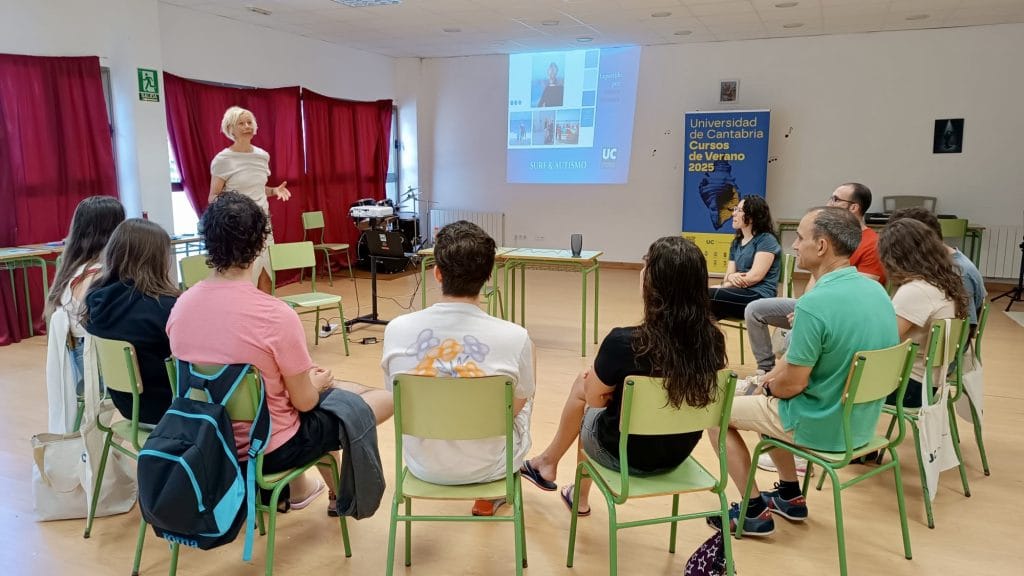
In the end, we connected how the marine environment and the practice of surfing can have a positive impact on individuals with autism. We shared videos created by adolescents from my practice, which allowed us to hear firsthand about their experiences and perspectives on autism and their relationship with the sea. I also introduced the Disfrutar el Mar Association, where we offer social-sports activities for children and young people with diverse developmental needs.
Time flew by, and at the end of the session, the request for a second part truly moved me. Not just because of the interest in the topic, but because it showed me that I had managed to connect the content with the people.
Including topics like diversity and autism in a surf course may seem unusual at first, but it not only helps us recognize the deep connection surfing has with our society, it also allows us to see how this sport can promote community participation for everyone—with a positive impact on health, development, and well-being.
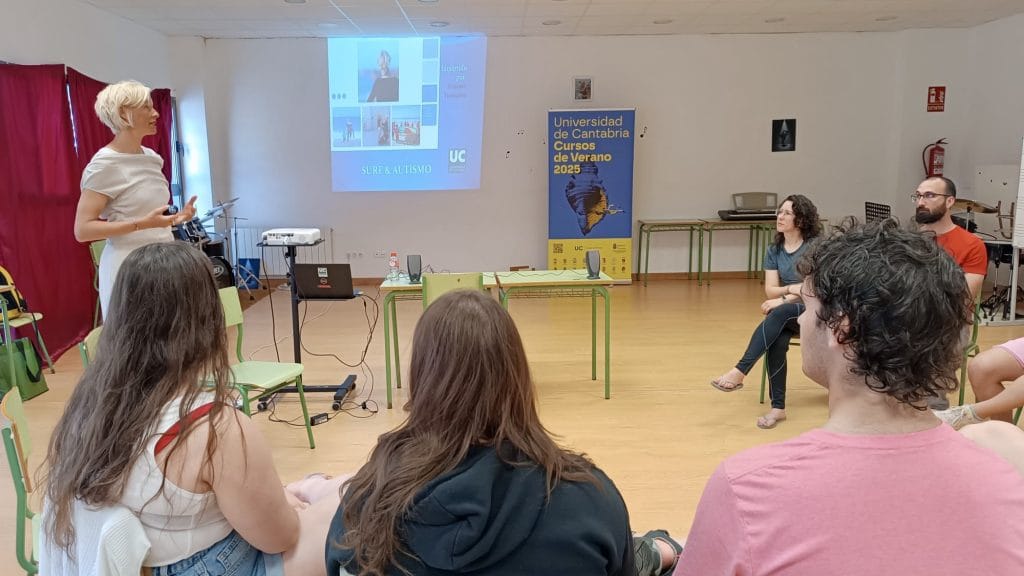
I really enjoyed sharing not only my knowledge and experiences, but also my perspectives and ways of thinking about how we live together in society.
I would like to give special thanks to Mikel Pérez, from the University of Cantabria, for inviting me to participate.