 Familias
Tuesday 25th, I had the opportunity to deliver a training session to professionals from the Guardia Civil, in a joint day that also included members of the Police. The aim was to strengthen their capacity to attend to diversity in their daily work.
We began by reflecting on the prejudices we all carry and how they shape the way we interpret and respond to others. We talked about our beliefs, values and experiences—our “backpack”—which often influences us more than we realise.
We then worked on a reframing exercise, a practice rooted in systemic thinking, which helped illustrate how a single situation can be interpreted in many different ways. Before the session, I had gathered examples of everyday situations they commonly face, along with contributions from several autistic individuals who shared experiences and needs they consider relevant.
In real interventions, we tend to form a quick idea of what is happening, who the victims are, or what may have occurred. Yet each situation can have multiple possible explanations. The challenge lies in keeping those options open instead of rushing to the first conclusion.
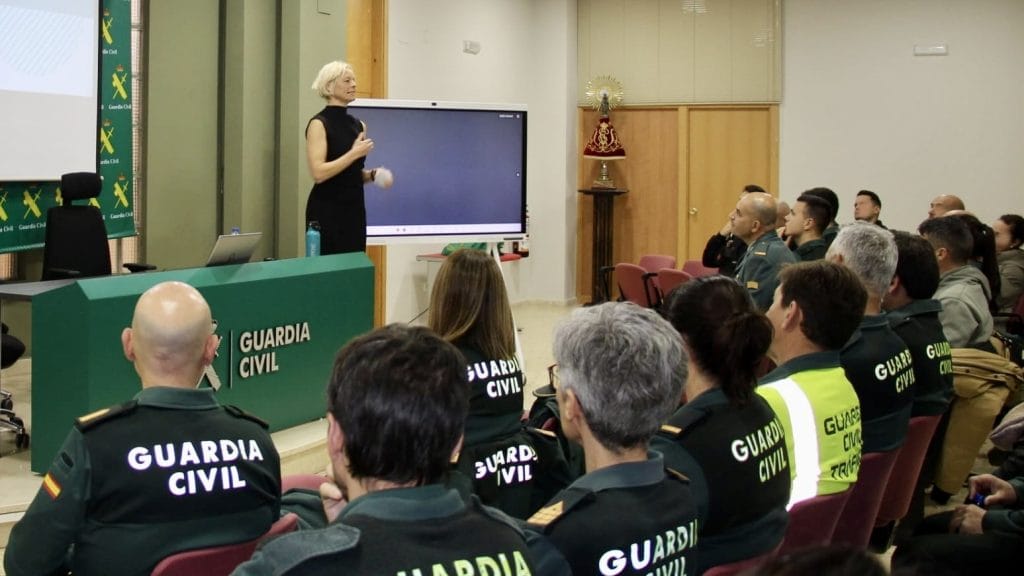
We also carried out a roleplay in which I attended to them in German. The goal was to help them experience what it feels like to be supported in a language one does not understand—the stress, confusion and vulnerability that can arise in that context.
They could see that, in many circumstances, the person’s stress is the factor most likely to escalate the situation. This is why calmness and respect become essential tools to ensure anyone feels accompanied and well attended.
We concluded the training by reading and listening to testimonies from autistic individuals. Through their words, we were able to deepen our understanding of the importance of respectful interaction, paying attention to the signals each person expresses, and recognising the role that personal space plays in communication.
Although time was short, we were able to identify key aspects that support good practice when attending to people with different conditions and needs. As in many areas, the starting point is within ourselves: cultivating awareness, reviewing our assumptions and, from there, developing attitudes that allow for more humane and accurate responses. Without that internal work, no guideline truly takes root.
It was a pleasure to listen to the other speakers and to witness the strong commitment from different fields working towards a shared goal.